
How to Audit Your Design
Auditing for accessibility is a critical step in professional UI/UX design. Follow these steps to verify your color choices:
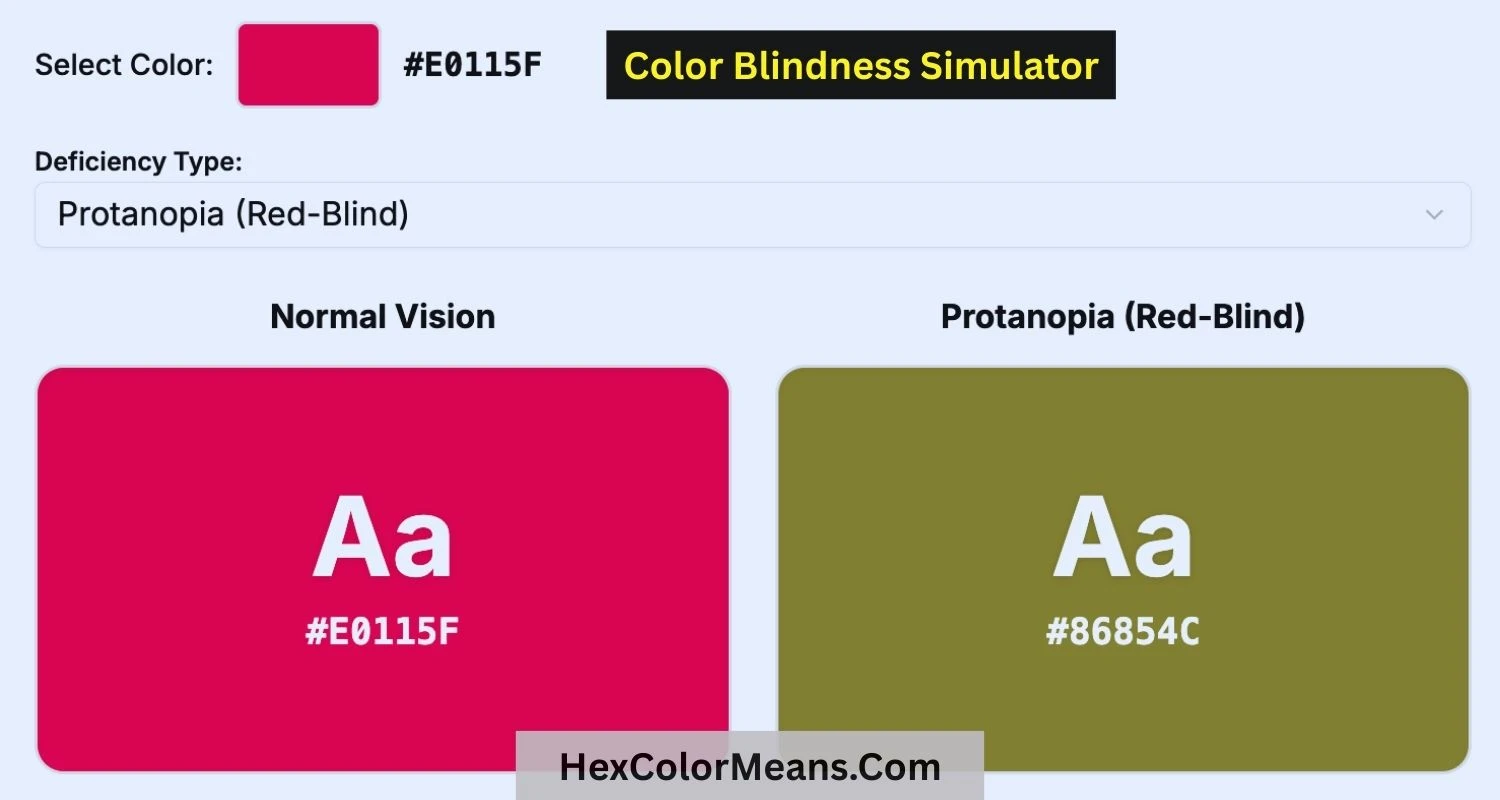
- 1Select any base color from your palette using our integrated color picker.
- 2Choose a deficiency type—start with Deuteranopia as it is the most common.
- 3Compare the original hue with the simulated result in the side-by-side preview.
- 4Check if critical information (like 'Success' vs 'Error') remains distinguishable.
- 5Adjust the hue or lightness until your color cues are clear to all users.
Guide to Color Vision Deficiency
Color vision deficiency (CVD) affects how the eye perceives specific ranges of light. It is usually caused by the absence or malfunction of light-sensitive cone cells in the retina. Understanding these types is essential for building inclusive digital products.
Red-Green Deficiencies
Protanopia
Total lack of red retinal photoreceptors. Reds appear dark or gray.
Protanomaly
Reduced sensitivity to red light. Reds appear shifted toward green.
Deuteranopia
Total lack of green retinal photoreceptors. Greens appear brown or gray.
Deuteranomaly
Most common type. Reduced sensitivity to green, making it hard to separate from red.
Blue-Yellow & Total Deficiencies
Tritanopia
Very rare. Blue appears green, and yellow appears violet or light gray.
Tritanomaly
Reduced blue sensitivity. Colors appear slightly muted and harder to distinguish.
Achromatopsia
Total color blindness. Vision is limited to shades of black, white, and gray.
Designing for Total Inclusion
Great design works for everyone. Accessibility isn't just about passing a test; it's about providing a reliable experience. Follow these best practices to ensure your interface is truly inclusive:
- ✓
Never rely on color alone to convey crucial state changes or information.
- ✓
Use patterns, icons, or text labels alongside color for better distinction.
- ✓
Maintain high luminance contrast between elements, especially for typography.
"Accessibility is the hallmark of professional design quality."
— Inclusive Design Principles